When people think about Dentist Diagnose Sleep Apnea, they usually imagine visiting a sleep specialist or a hospital sleep lab. Very few realize that a dentist can play an important role in identifying sleep apnea early. In fact, many patients first learn they may have sleep apnea during a routine dental visit.
So, can a dentist for sleep apnea? The short answer is: dentists do not make the final medical diagnosis, but they are often the first professionals to detect warning signs and guide patients toward proper testing and treatment.
In this article, we’ll explain Can a Dentist Diagnose Sleep Apnea? what they can and cannot diagnose, and why dental clinics are becoming a key part of sleep apnea care.
Understanding Sleep Apnea
Sleep apnea is a sleep disorder in which breathing repeatedly stops and starts during sleep. These breathing pauses reduce oxygen levels and disrupt deep sleep, even if the person doesn’t fully wake up.
Over time, untreated sleep apnea can increase the risk of heart disease, high blood pressure, stroke, diabetes, and chronic fatigue. Because many symptoms happen during sleep, the condition often goes unnoticed for years.
This is where dentists come in.
Why Dentists Are Well-Positioned to Spot Sleep Apnea
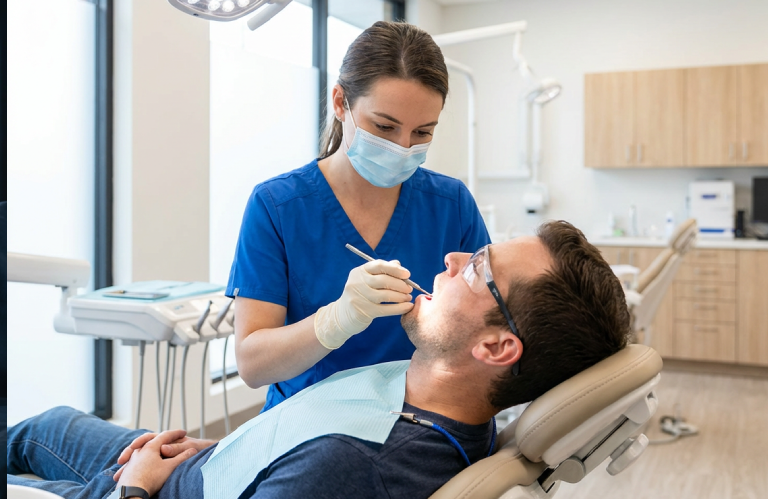
Dentists see their patients regularly, often more frequently than physicians. During dental exams, they closely examine the mouth, jaw, teeth, tongue, and airway — all areas directly involved in breathing during sleep.
Dentists are trained to notice physical signs that may increase the risk of airway blockage. These include jaw position, tongue size, airway space, and bite alignment. Over time, dentists may also observe changes linked to poor sleep quality.
Because of this, dentists are often the first to suspect sleep apnea and start the conversation with the patient.
Signs Dentists Look for During Dental Exams
During routine checkups, dentists may notice several red flags that point toward sleep apnea. One common sign is teeth grinding, also known as bruxism. Many people with sleep apnea grind their teeth at night due to stress on the body when breathing stops.
Dentists may also observe a narrow airway, enlarged tongue, scalloped tongue edges, or a recessed lower jaw. These features can increase the risk of airway collapse during sleep.
Worn teeth, cracked fillings, jaw pain, and headaches can also be indirect signs of sleep-disordered breathing.
What Dentists Ask Patients About Sleep
In addition to physical signs, dentists often ask questions that help identify sleep apnea risk. They may ask about loud snoring, daytime tiredness, morning headaches, dry mouth, or waking up gasping for air.
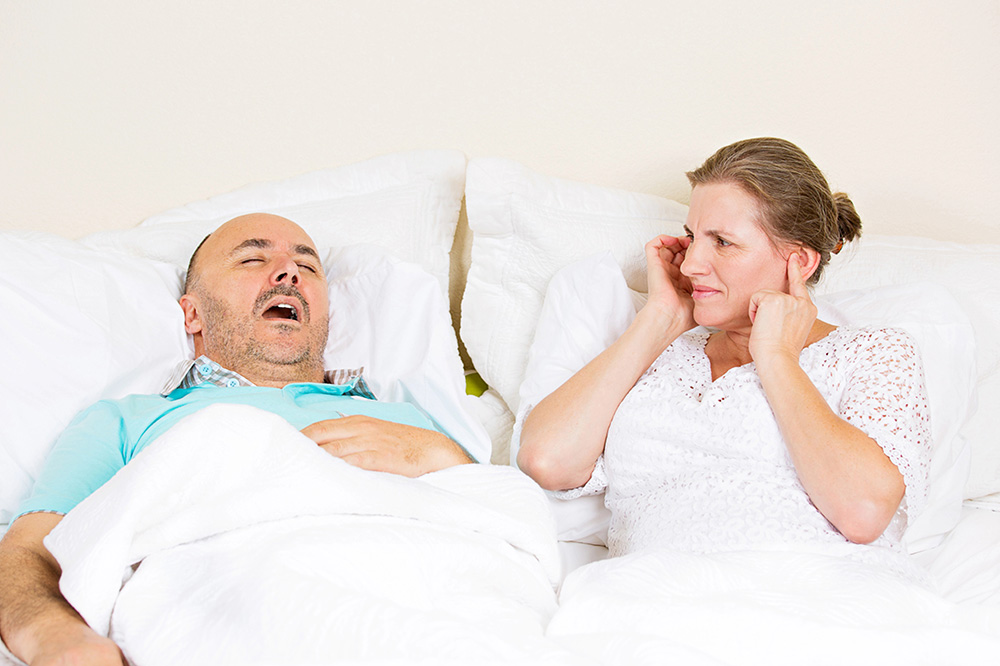
If a patient mentions that a partner notices breathing pauses or choking sounds during sleep, this is a strong indicator that further evaluation is needed.
These conversations help dentists decide whether to recommend sleep testing.
Can a Dentist Officially Diagnose Sleep Apnea?
A dentist cannot make the final medical diagnosis of sleep apnea on their own. A formal diagnosis requires a sleep study, either in a sleep lab or through a home sleep test, interpreted by a qualified sleep physician.
However, dentists play a crucial role in screening, identifying risk, and initiating the diagnostic process. In many cases, patients would never seek testing if a dentist had not raised the concern.
In this way, a dentist for sleep apnea acts as an early detector and guide rather than the final diagnosing authority.
How Dentists Help With Sleep Apnea Testing
Dentists trained in dental sleep medicine often help patients arrange sleep testing. In some cases, they may recommend a home sleep test for patients who show clear signs of obstructive sleep apnea.
Home sleep tests are simple, comfortable, and allow patients to sleep in their own beds. Once the test is completed, the results are reviewed by a licensed physician who confirms the diagnosis.
This collaborative approach helps patients move quickly from suspicion to confirmation.
The Role of Dentists After Diagnosis
Once sleep apnea is diagnosed, dentists become even more involved — especially for patients with obstructive sleep apnea.
Dental professionals can provide oral appliance therapy, a common and effective treatment option for mild to moderate obstructive sleep apnea. These custom-made devices gently reposition the jaw to keep the airway open during sleep.
Many patients prefer oral appliances because they are comfortable, portable, and easy to use.
Why Dental Involvement Improves Patient Outcomes
Patients are more likely to follow through with treatment when they understand their condition and feel supported. Dentists often spend more time educating patients about how sleep apnea affects oral health, overall health, and quality of life.
Because dentists monitor jaw health, teeth wear, and appliance effectiveness, they can track improvements over time and adjust treatment as needed.
This long-term relationship helps ensure better results and improved sleep quality.
When You Should Talk to Your Dentist About Sleep Apnea
You should speak with your dentist if you experience loud snoring, daytime fatigue, morning headaches, jaw pain, or teeth grinding. Even if you don’t snore loudly, other symptoms may still point to sleep apnea.
If your dentist raises concerns, it’s important to take them seriously. Early evaluation can prevent years of poor sleep and long-term health complications.
Why Early Detection Matters
Sleep apnea often worsens over time if left untreated. The earlier it is identified, the easier it is to manage.
By spotting early warning signs, dentists help patients get tested sooner, start treatment earlier, and reduce the risk of serious complications.
Final Thoughts
So, can a dentist diagnose sleep apnea? While dentists do not make the final medical diagnosis, they play a critical role in identifying warning signs, guiding patients to sleep testing, and providing effective treatment options.
A dentist for sleep apnea is often the first step in a patient’s journey toward better sleep and better health. If your dentist asks about your sleep, it’s not a casual question — it could be life-changing.