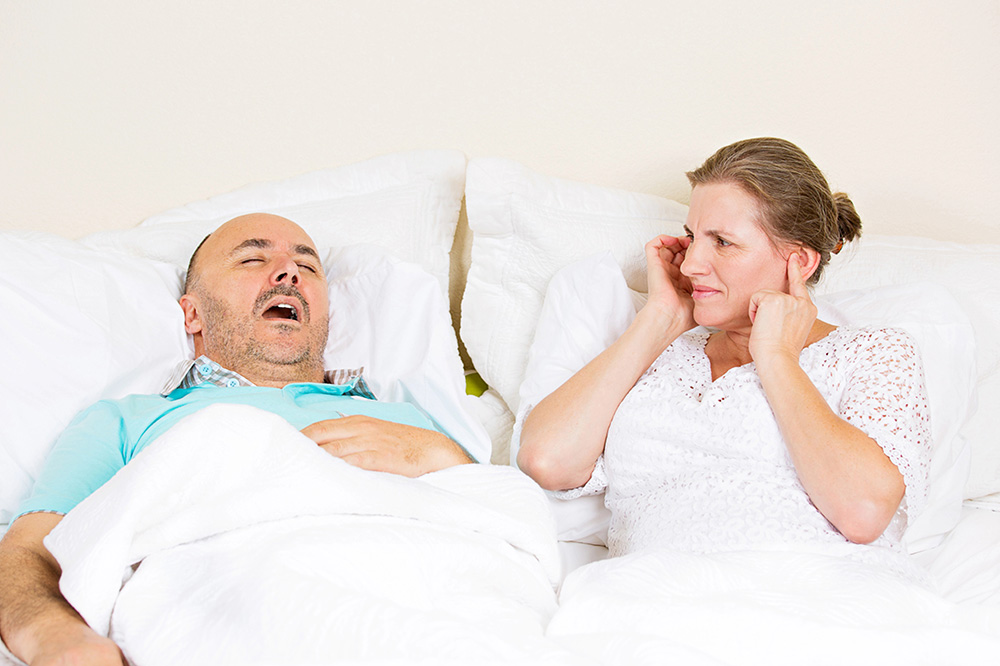
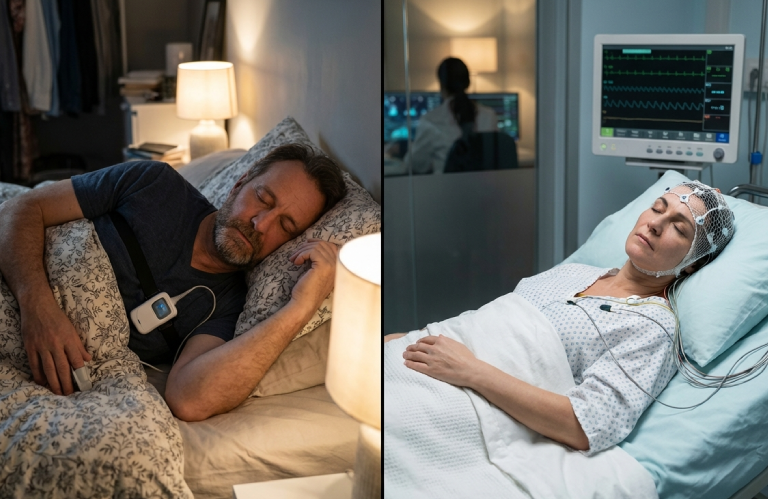
If you or a loved one is experiencing loud snoring, daytime fatigue, or poor sleep quality, you may be advised to undergo a sleep test. This is often the first step in diagnosing sleep apnea and other sleep disorders. However, many patients feel confused when choosing between a home sleep test and a sleep lab study.
Both tests are used to evaluate sleep apnea, but they work in different ways and are recommended for different situations. In this article, we’ll explain the differences in simple terms so you can understand which option may be right for you.
Why Sleep Testing Is Important
Sleep apnea is a condition where breathing repeatedly stops and starts during sleep. These pauses reduce oxygen levels and interrupt restful sleep, even if the person doesn’t fully wake up.
Without proper diagnosis and treatment, sleep apnea can increase the risk of high blood pressure, heart disease, stroke, diabetes, and accidents due to daytime sleepiness. Sleep testing helps confirm whether sleep apnea is present and how severe it is.
What Is a Home Sleep Test?
A home sleep test is a portable sleep study that you can do in the comfort of your own home. It is designed to diagnose moderate to severe obstructive sleep apnea.
The test involves wearing a small device while you sleep. This device usually measures breathing patterns, oxygen levels, airflow, and heart rate. The setup is simple, and patients receive clear instructions on how to use the equipment.
Because you sleep in your own bed, many people find the home sleep test more comfortable and less stressful than a sleep lab study.
Advantages of a Home Sleep Test
One of the biggest advantages of a home sleep test is convenience. You don’t need to spend the night in a clinic or hospital, and the test fits easily into your normal routine.
Home sleep tests are also more affordable than in-lab studies and are widely used for patients with a high likelihood of obstructive sleep apnea. They are ideal for people who snore loudly, feel excessively tired during the day, or have breathing pauses reported by a partner.
For many patients, the home sleep test provides enough information to move forward with treatment.
Limitations of a Home Sleep Test
While home sleep tests are useful, they are not suitable for everyone. They focus mainly on breathing and oxygen levels and do not measure brain activity or sleep stages.
This means home sleep tests may miss other sleep disorders or milder forms of sleep apnea. They are also not recommended for patients with complex medical conditions, heart disease, or suspected central sleep apnea.
If results are unclear, additional testing may still be needed.
What Is a Sleep Lab Study?
A sleep lab study, also known as an in-lab sleep study or polysomnography, is conducted overnight in a sleep clinic or hospital.
During the study, sensors are placed on the body to monitor brain waves, breathing, oxygen levels, heart rhythm, muscle movement, and sleep stages. A trained technician observes the data throughout the night.
This test provides the most detailed and accurate picture of how your body behaves during sleep.
Advantages of a Sleep Lab Study
The biggest benefit of a sleep lab study is accuracy. It can diagnose all types of sleep apnea, including obstructive, central, and complex sleep apnea.
Because it records brain activity, it can also detect other sleep disorders such as insomnia, restless leg syndrome, or abnormal sleep behaviors.
Sleep lab studies are often recommended when symptoms are severe, previous testing was inconclusive, or when complex health conditions are present.
Common Concerns About Sleep Lab Studies
Many patients worry that sleeping in a clinic will be uncomfortable or difficult. While it may feel unfamiliar at first, most people are able to sleep well enough for the study to collect useful data.
The rooms are designed to be quiet and comfortable, and technicians are trained to make the experience as smooth as possible.
Home Sleep Test vs Sleep Lab Study: Key Differences
The main difference between a home sleep test and a sleep lab study is the level of detail. Home sleep tests focus on breathing and oxygen levels, while sleep lab studies monitor the entire sleep process.
Home sleep tests are convenient, affordable, and effective for diagnosing obstructive sleep apnea in straightforward cases. Sleep lab studies are more comprehensive and are better for complex or unclear cases.
Your healthcare provider will recommend the best option based on symptoms, medical history, and risk factors.
How Dentists Can Be Involved in Sleep Testing
Dental professionals trained in dental sleep medicine often help identify patients who may need sleep testing. During dental exams, signs such as teeth grinding, jaw positioning issues, or airway narrowing may suggest sleep apnea.
Dentists may recommend a home sleep test or refer patients for a sleep lab study. For many patients with obstructive sleep apnea, dental treatment options are available once diagnosis is confirmed.
What Happens After the Test?
After completing the test, the data is reviewed and analyzed. If sleep apnea is diagnosed, the severity is determined, which helps guide treatment decisions.
Many patients with obstructive sleep apnea benefit from oral appliance therapy, which helps keep the airway open during sleep. Others may need additional medical treatment depending on the diagnosis.
Which One Do You Need?
Choosing between a home sleep test and a sleep lab study depends on your symptoms and health profile. If you have classic signs of obstructive sleep apnea and no major health conditions, a home sleep test may be enough.
If symptoms are complex, severe, or unclear, a sleep lab study may be the better choice.
The most important step is not delaying testing. Early diagnosis leads to better sleep, better health, and better quality of life.
Final Thoughts
Understanding the difference between a home sleep test and a sleep lab study helps you make informed decisions about your health. Both tests play an important role in diagnosing sleep apnea, and each has its own benefits.
If you’re experiencing sleep problems, seeking professional guidance is the first step toward restful sleep and long-term well-being.