Sleep apnea is a common but often undiagnosed sleep disorder. Many people live with it for years without realizing that their poor sleep, constant tiredness, or loud snoring is linked to a medical condition. One of the biggest reasons sleep apnea goes untreated is because people don’t know how sleep apnea is diagnosed or what the process involves.
In this article, we’ll walk you through the signs that lead to a sleep apnea diagnosis, the tests used to confirm it, and what you can expect at each step — all explained in simple, easy words.
Why Diagnosing Sleep Apnea Is Important
sleep apnea diagnosis is not just about snoring or feeling tired. When breathing repeatedly stops during sleep, oxygen levels in the body drop. This puts stress on the heart, brain, and other organs.
Without a proper sleep apnea diagnosis, the condition can increase the risk of high blood pressure, heart disease, stroke, diabetes, memory problems, and accidents caused by daytime sleepiness. The good news is that once sleep apnea is diagnosed, effective treatment options are available.
Common Signs That Lead to a Sleep Apnea Diagnosis
The first step in diagnosing sleep apnea is recognizing the warning signs. Many symptoms happen during sleep, which is why partners or family members often notice them first.
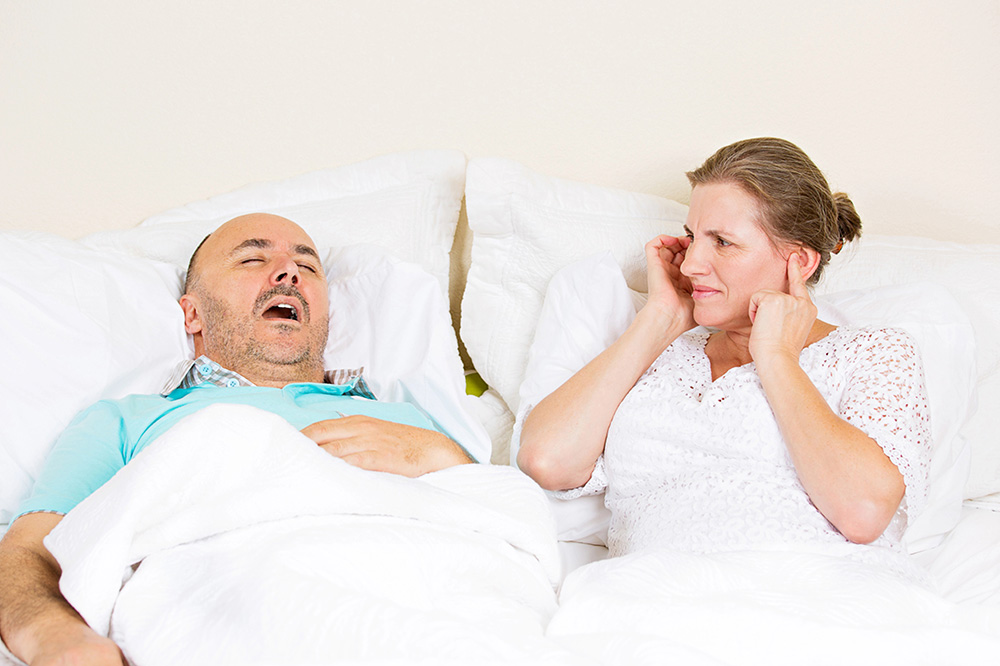
Loud and frequent snoring is one of the most common signs. This is especially concerning if snoring is interrupted by pauses in breathing, choking, or gasping sounds.
Other signs include waking up feeling tired, morning headaches, dry mouth, poor concentration, irritability, and excessive daytime sleepiness. Some people also experience insomnia or restless sleep.
If these symptoms happen regularly, a professional evaluation is strongly recommended.
Initial Medical or Dental Evaluation
Sleep apnea diagnosis often begins with a discussion about symptoms and medical history. A healthcare provider will ask about sleep habits, snoring patterns, daytime fatigue, and any existing health conditions.
Dental professionals can also play an important role in early detection. During routine dental exams, dentists may notice signs such as teeth grinding, jaw positioning issues, a narrow airway, or enlarged tongue tissues. These findings can raise suspicion of obstructive sleep apnea and lead to further testing.
Physical Examination and Risk Assessment
A physical examination may include checking the neck size, jaw structure, nasal passages, and throat. Excess weight, large tonsils, or a recessed jaw can increase the risk of airway blockage during sleep.
The provider may also assess lifestyle factors such as smoking, alcohol use, and family history. This step helps determine whether a sleep study is needed.
Sleep Studies: The Key Test for Sleep Apnea Diagnosis
A sleep study is the most important test used to confirm sleep apnea. There are two main types of sleep studies: in-lab sleep studies and home sleep tests.
Both tests monitor breathing patterns, oxygen levels, heart rate, and sleep quality, but they differ in how and where they are performed.
In-Lab Sleep Study (Polysomnography)
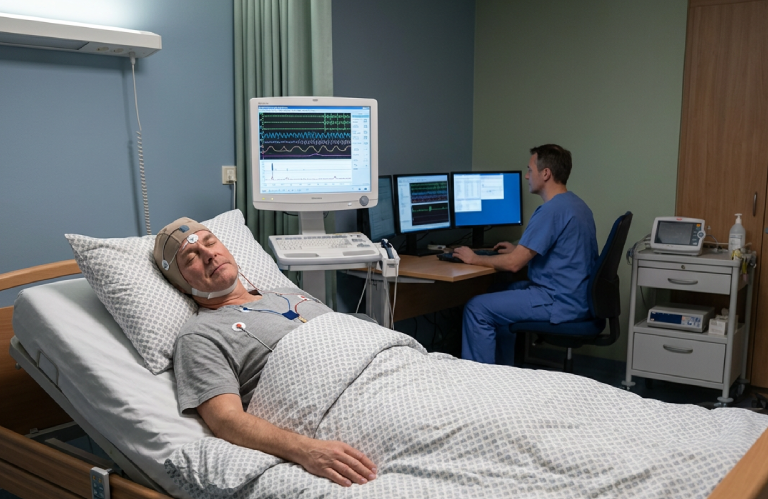
An in-lab sleep study is conducted overnight in a sleep clinic or hospital. The patient sleeps in a comfortable room while sensors are placed on the body to monitor brain activity, breathing, oxygen levels, heart rhythm, and muscle movement.
This test provides the most detailed information and is often recommended for complex cases or when central sleep apnea is suspected.
Although the idea of sleeping in a clinic may sound uncomfortable, most patients find the experience easier than expected.
Home Sleep Test
A home sleep test is a simpler option for many patients. It allows you to sleep in your own bed while wearing a portable monitoring device.
Home sleep tests typically measure airflow, breathing effort, and oxygen levels. They are commonly used to diagnose moderate to severe obstructive sleep apnea.
While home tests are convenient, they may not detect all types of sleep disorders. Your provider will decide which option is best based on symptoms and risk factors.
Understanding Sleep Study Results
After the sleep study, the results are analyzed to determine whether sleep apnea is present and how severe it is. One key measurement is the apnea-hypopnea index (AHI), which counts how many breathing interruptions occur per hour of sleep.
Based on the results, sleep apnea may be classified as mild, moderate, or severe. This classification helps guide treatment decisions.
What Happens After a Sleep Apnea Diagnosis
Once sleep apnea is diagnosed, the next step is choosing the right treatment. Treatment depends on the type and severity of sleep apnea, as well as the patient’s overall health.
For many people with obstructive sleep apnea, oral appliance therapy provided by trained dental professionals can be an effective and comfortable solution. These custom devices help keep the airway open by gently repositioning the jaw during sleep.
Other patients may benefit from lifestyle changes, medical therapies, or specialized breathing devices.
What to Expect Emotionally and Physically
It’s normal to feel anxious before testing or uncertain after receiving a diagnosis. Many patients worry about what sleep apnea means for their future.
The reality is that diagnosis is the first step toward better sleep and better health. Most people notice significant improvements in energy, mood, focus, and quality of life once treatment begins.
Why Early Diagnosis Makes a Big Difference
Early sleep apnea diagnosis can prevent long-term health problems and improve daily functioning. The sooner the condition is identified, the easier it is to manage and treat.
Ignoring symptoms or delaying testing can allow complications to develop, making treatment more complex later on.
Final Thoughts
Understanding how sleep apnea is diagnosed removes fear and uncertainty from the process. From recognizing early signs to completing a sleep study, each step is designed to protect your health and improve your sleep.
If you or a loved one experiences loud snoring, breathing pauses during sleep, or constant daytime fatigue, seeking professional evaluation is a smart and proactive choice. A proper sleep apnea diagnosis can be life-changing.