
Why Sleep Apnea and Diabetes Are Partners in Disease
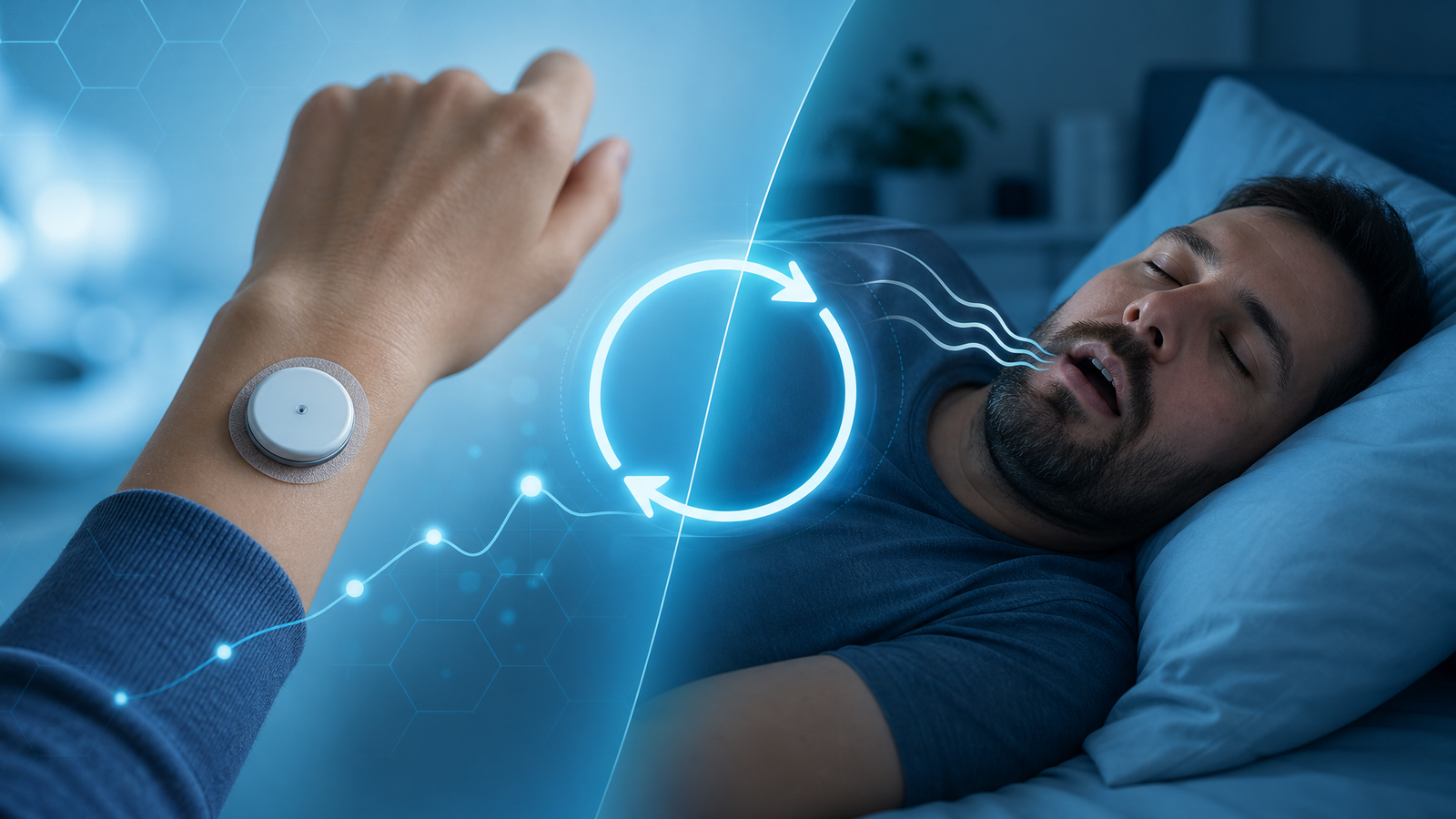
Sleep apnea and diabetes share more than a patient population. They share a metabolic pathway that causes each condition to worsen the other in a self-reinforcing cycle.
Obstructive sleep apnea causes repeated oxygen drops during sleep that trigger systemic stress responses. Those stress responses elevate cortisol, activate the sympathetic nervous system, and impair glucose metabolism. Over time, this leads to insulin resistance and, in many patients, the development or worsening of Type 2 diabetes.
Meanwhile, the neuropathy, obesity, and metabolic dysregulation caused by poorly controlled diabetes further compromises airway muscle tone and exacerbates OSA severity.
The two conditions spiral together. Breaking one has documented benefits for the other.
How Sleep Apnea Causes Insulin Resistance
The metabolic pathway from OSA to insulin resistance runs through intermittent hypoxia.
Each apnea event causes blood oxygen to drop and CO2 to rise. The brain responds by activating the sympathetic nervous system and releasing cortisol. Both of these responses, which evolved for short-term emergency situations, impair insulin sensitivity when triggered repeatedly throughout every night.
The specific mechanisms include:
- Cortisol elevation: Cortisol directly opposes insulin action, promoting hepatic glucose production and reducing peripheral glucose uptake.
- Sympathetic activation: Catecholamines (adrenaline and noradrenaline) reduce pancreatic insulin secretion and promote gluconeogenesis.
- Adipokine dysregulation: OSA alters adiponectin and leptin signaling, both of which regulate glucose metabolism.
- Oxidative stress: Intermittent hypoxia generates reactive oxygen species that damage insulin-signaling pathways in cells.
A 2026 cross-sectional observational study published in PMC confirmed the relationship between obstructive sleep apnea and insulin resistance in patients with Type 2 diabetes mellitus, finding that OSA severity directly correlated with markers of insulin resistance. Source: PMC/NIH
The Staggering Overlap: Who Is at Risk
The prevalence data for sleep apnea and Type 2 diabetes is striking.
A 2022 research review, cited in a 2026 Healthline clinical update, estimated that more than 50% of people with Type 2 diabetes have obstructive sleep apnea. Conversely, people with OSA face substantially elevated risk of developing T2DM. Source: Healthline
The American Academy of Sleep Medicine confirms that Type 2 diabetics have a high risk for sleep apnea and recommends OSA screening as part of standard diabetes management. Source: AASM
A 2025 retrospective single-center analysis published in PMC explored the bidirectional link between OSA and diabetes mellitus, confirming that the co-morbidity pattern is consistent, clinically significant, and likely underdetected in standard diabetes care. Source: PMC/NIH
What the International Diabetes Federation Says
The International Diabetes Federation (IDF) issued a formal consensus statement on sleep apnoea and Type 2 diabetes, recognizing OSA as a clinically significant risk factor for metabolic dysfunction. The IDF recommends that people with T2DM be screened for OSA, and that people with OSA be assessed for metabolic syndrome and diabetes risk. Source: IDF
This formal recognition from a leading global diabetes authority establishes that managing sleep apnea and diabetes is not optional for comprehensive diabetes care. It is standard of practice.
How Diabetes Makes Sleep Apnea Worse
The cycle runs in both directions. Poorly controlled diabetes worsens OSA through several mechanisms:
Peripheral neuropathy reduces the responsiveness of upper airway muscles to signals from the brain, making airway collapse more likely and less recoverable during apnea events.
Obesity, which is both a cause and consequence of insulin resistance, increases pharyngeal fat deposition and directly narrows the airway.
Autonomic neuropathy in advanced diabetes impairs the arousal responses that normally prevent prolonged apnea events, making episodes longer and more severe.
Fluid retention associated with diabetic kidney complications can shift fluid to the upper body during sleep, further compressing the airway.
For patients managing diabetes and sleep disorders simultaneously, breaking the cycle at the sleep apnea end is clinically more accessible than most realize.
The UAE Risk: Why This Matters for Dubai Residents
The sleep apnea and diabetes overlap carries particular urgency in the UAE context.
The UAE has among the highest diabetes prevalence rates in the world, with estimates placing the adult diabetes rate above 19%. Simultaneously, the UAE population carries multiple overlapping OSA risk factors: high obesity rates, sedentary work culture, late eating patterns, and low sleep apnea diagnosis rates.
In this population, the majority of undiagnosed OSA patients are likely also at elevated metabolic risk. Many may already have insulin resistance or T2DM worsened by their untreated airway condition, without any awareness of the connection.
Breaking the Cycle: Does Treating Sleep Apnea Improve Diabetes?
Yes. Clinical evidence confirms that effective sleep apnea treatment produces measurable improvements in glycaemic control.
A November 2025 analysis published in Medical Independent confirmed that treating OSA reduces sympathetic activation, systemic inflammation, and cortisol output, all of which directly improve insulin sensitivity and glucose metabolism. Source: Medical Independent
Patients who treat OSA through CPAP or oral appliance therapy consistently show improvements in HbA1c, fasting glucose, and overall metabolic panel results over 3-6 months of treatment.
At Leila Hariri Dental and Sleep Apnea Clinic, our dental sleep apnea treatment in Dubai uses custom oral appliance therapy as a CPAP-free solution. It is an especially relevant option for diabetic patients managing multiple co-morbidities who need simple, portable treatment without added complexity. Visit our Sleep Apnea Treatment page.
Book a Sleep Assessment at LHDM Dubai
If you have Type 2 diabetes in Dubai and have never been screened for sleep apnea, you may be managing only half of your metabolic health equation.
At LHDM, our sleep apnea specialists provide comprehensive assessment and treatment tailored to your full health profile. The cycle can be broken. Let us help you start.