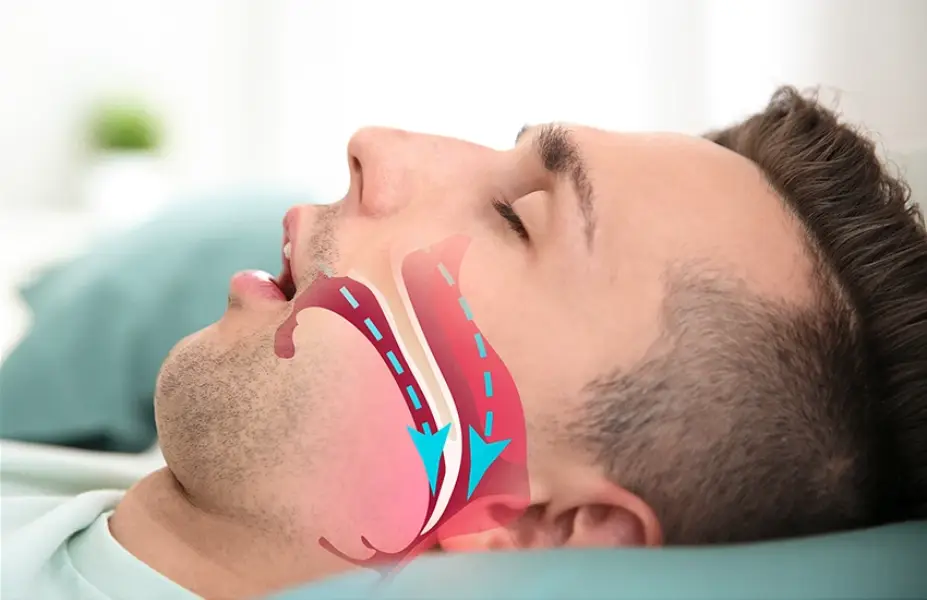

Sleep apnea is a clinically recognized, independent cardiovascular risk factor. Every apnea event surges adrenaline, spikes blood pressure, and stresses the heart. Multiply that by hundreds of events per night, every night, for years, and the result is measurable structural heart damage. Dubai residents face elevated risk due to regional lifestyle factors. Early treatment is the most effective cardiac protection available.
Why Sleep Apnea Is a Cardiovascular Emergency
Sleep apnea is not simply a loud snoring problem. In cardiology, it is classified as an independent risk factor for sleep apnea heart disease, meaning it raises your cardiovascular risk regardless of whether you have any other conditions, without obesity, without diabetes, without family history.
A 2024 publication in PubMed states this directly: sleep apnea affects nearly one billion people worldwide and represents a common and dangerous cardiovascular risk factor. Source: PubMed
The danger is not hypothetical. It is mechanical. Every time your airway collapses during sleep, a cascade of cardiovascular stress begins, and it happens repeatedly throughout every single night, for years.
How Sleep Apnea Damages the Heart Step by Step
To understand OSA cardiovascular complications, the physiological sequence of each apnea event matters:
- The airway collapses. Breathing stops.
- Blood oxygen drops through intermittent hypoxia.
- The brain activates the sympathetic nervous system in emergency mode.
- Adrenaline floods the bloodstream. Heart rate and blood pressure surge acutely.
- Breathing resumes. The cycle repeats – potentially 100 times per hour.
This repeated sympathetic activation does not fully reset between episodes. Over time, baseline blood pressure and resting heart rate both climb. Arterial walls experience repeated mechanical stress. Oxidative inflammation builds in cardiac tissue.
The cumulative result is what researchers call sympathetic overdrive: a state where the cardiovascular system remains partially activated even during waking hours, accelerating atherosclerosis, elevating cardiac workload, and creating the structural conditions for arrhythmia and heart failure. Source: PMC/NIH
Sleep Apnea and High Blood Pressure
Sleep apnea hypertension is the most consistently documented cardiovascular consequence of OSA, and the relationship is dose-dependent: more severe apnea correlates with higher baseline blood pressure.
The sympathetic nervous system activation from each apnea event does not fully normalize overnight. After years of this cycle, morning blood pressure readings are elevated and do not respond adequately to standard antihypertensive medication.
Henry Ford Health’s cardiology team notes that cardiologists now routinely screen patients with resistant hypertension for obstructive sleep apnea high blood pressure as a clinical priority. Source: Henry Ford Health
If your blood pressure remains poorly controlled despite medication, your airway is worth evaluating.
Sleep Apnea, Atrial Fibrillation and Stroke
The sleep apnea cardiovascular risk extends well beyond blood pressure:
Atrial fibrillation (AFib): Repeated fluctuations in intrathoracic pressure during apnea events mechanically stress the atria. This increases susceptibility to AFib, an irregular heartbeat that substantially raises stroke risk and reduces cardiac output.
Stroke: The combination of elevated blood pressure, early-stage atherosclerosis, and AFib creates multiple convergent pathways toward ischemic stroke. Sleep apnea stroke risk is elevated even in patients with otherwise low cardiovascular profiles.
Heart failure: Chronic OSA forces the heart to pump against the resistance of a partially obstructed airway. Over years, this leads to ventricular hypertrophy and increased risk of both systolic and diastolic heart failure.
Cardiac mortality: UPMC Health data confirms that people with sleep apnea face higher rates of arrhythmia, congestive heart failure, stroke, and mortality from cardiovascular causes. Source: UPMC
Sleep apnea atrial fibrillation is now considered important enough that the American College of Cardiology recommends OSA screening for all patients presenting with new-onset AFib.
What the American Heart Association Says
The American Heart Association issued a formal scientific statement through its flagship journal Circulation, classifying OSA as a condition with direct cardiovascular consequences. Approximately 34% of middle-aged men and 17% of middle-aged women meet clinical criteria for OSA, most of whom remain undiagnosed. Source: AHA Circulation
The AHA recommends cardiovascular risk patients receive OSA evaluation as part of their standard cardiac workup. It is no longer acceptable to assess heart risk without examining the airway. Source: American Heart Association
Why Dubai Residents Face Higher Cardiovascular OSA Risk
Sleep apnea treatment in Dubai carries urgency beyond global norms. The UAE population carries multiple overlapping cardiovascular OSA risk factors:
Elevated BMI rates: The UAE has among the highest obesity rates in the GCC. Excess adipose tissue around the neck is the single strongest anatomical predictor of OSA severity and the cardiovascular complications that follow.
Sedentary work culture: The dominance of desk-based, air-conditioned professional environments correlates with physical deconditioning and reduced cardiovascular reserve, compounding OSA-related cardiac stress.
Late-night dietary patterns: Cultural habits of late, heavy evening meals followed shortly by sleep increase gastroesophageal reflux, pharyngeal swelling, and airway narrowing, all of which worsen OSA severity.
Low diagnostic rates: Awareness of CPAP alternatives and dental-led sleep apnea treatment remains limited across the UAE. Most OSA patients go undiagnosed for years. A 2024 UT Southwestern study confirmed the link between sleep apnea and heart disease exists even in young adults, making early intervention especially important. Source: UT Southwestern
Who Needs Cardiovascular Sleep Screening
Priority candidates for immediate sleep apnea evaluation include anyone who:
- Snores loudly or has been told they stop breathing during sleep
- Has high blood pressure that is difficult to control with medication
- Has been diagnosed with AFib, a previous stroke, or coronary artery disease
- Has a neck circumference above 40cm
- Is overweight or obese
- Wakes with morning headaches or chest tightness
- Experiences unexplained daytime exhaustion despite adequate sleep time
How Treating Sleep Apnea Protects Your Heart
Effective sleep apnea treatment produces direct cardiovascular benefits: reductions in systolic and diastolic blood pressure, improvements in AFib burden, reductions in C-reactive protein, and better heart rate variability recovery overnight.
For patients who cannot tolerate CPAP, the CPAP alternative oral appliance is a custom dental device that repositions the mandible during sleep to maintain airway patency. It is clinically validated for mild-to-moderate OSA and achieves equivalent cardiovascular improvements with significantly higher patient adherence.
LHDM: Cardiac-Aware Sleep Apnea Care in Dubai
At Leila Hariri Dental and Sleep Apnea Clinic, our dental sleep clinic in Dubai takes a whole-health approach to OSA treatment. We understand the cardiovascular stakes and design treatment plans that protect both your airway and your heart over the long term.
If you live in Dubai and carry cardiovascular risk factors, a sleep assessment may be the single most impactful step you take for your heart this year.