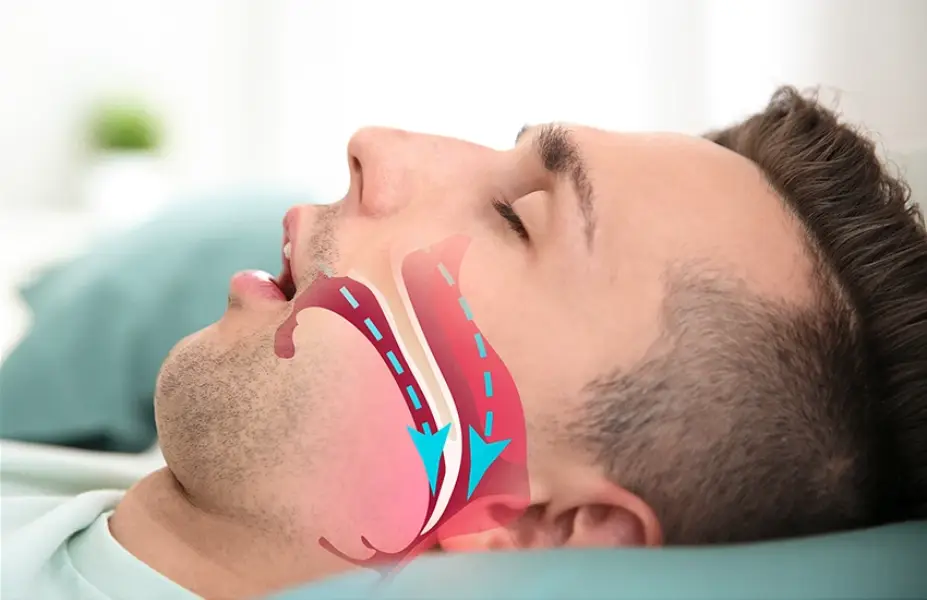

Sleep apnea starves the brain of oxygen and prevents the deep sleep stages required for memory consolidation, waste clearance, and cognitive recovery. The result is real, measurable cognitive impairment: brain fog, forgetfulness, poor concentration, and, in severe untreated cases, structural brain changes similar to early dementia. For most patients, treating the airway reverses these effects.
What Sleep Apnea Brain Fog Actually Is
Sleep apnea brain fog is not a vague or informal complaint. It is a clinically recognized pattern of cognitive symptoms caused by chronic intermittent hypoxia and fragmented deep sleep. Patients describe it consistently: a persistent mental heaviness, difficulty thinking clearly, trouble finding words, and a general sense that their brain is not operating at its usual speed.
For most people experiencing this, the explanation attributed to it is stress, aging, hormonal shifts, or work overload. Sleep apnea is rarely the first hypothesis, despite being one of the most common and most treatable causes of cognitive impairment in working-age adults.
The Oxygen Problem: How OSA Starves the Brain
Your brain accounts for approximately 2% of body weight but consumes around 20% of your total oxygen supply. It is the organ most acutely sensitive to oxygen deprivation.
Every obstructive sleep apnea event causes a measurable blood oxygen drop. In patients with moderate-to-severe OSA experiencing 20-60 events per hour, these oxygen drops can occur hundreds of times per night. Each one activates a stress arousal that interrupts the deep sleep stage the brain was in.
The brain needs:
- NREM Stage 3 (slow-wave sleep) to perform glymphatic clearance, removing metabolic waste products accumulated during the day
- REM sleep to consolidate emotional memories, process experiences, and restore prefrontal cortex function
Obstructive sleep apnea prevents both. The result is a brain running under-oxygenated and under-rested every single day. Sleep apnea mental clarity is not possible under these conditions.
Sleep Apnea Memory Loss Explained
Sleep apnea memory loss is one of the most consistently reported cognitive symptoms in OSA patients, and the mechanism is specific and well-understood.
Memory consolidation, the process of transferring information from short-term to long-term storage, occurs during slow-wave and REM sleep. Without access to these stages, the brain cannot complete this transfer. New information simply does not convert into lasting memories.
This presents clinically as:
Working memory failure: The inability to hold and manipulate information in real time. Patients forget what was said in the first half of a meeting by the time the second half begins. They lose track of multi-step instructions. They repeat themselves in conversations without awareness.
Episodic memory gaps: Difficulty recalling what was eaten, discussed, or done earlier in the day. A sense of time feeling vague or compressed.
Procedural learning impairment: Slowed acquisition of new skills, systems, or workflows.
Research published in PMC confirms that OSA cognitive impairment spans multiple memory domains, attention, executive function, and processing speed, with severity of deficit directly proportional to OSA severity. Source: PMC/NIH
REM Sleep Apnea and Brain Changes
A landmark 2025 study from UC Irvine established that REM sleep apnea brain changes are detectable even in adults without diagnosed cognitive impairment. Researchers found that low oxygen levels during REM sleep contribute to injury in brain regions vital to memory, with measurable structural changes visible on imaging.
The study suggests that hypoxemia during REM sleep is a specific, high-risk event for long-term cognitive health, separate from the general sleep fragmentation effects of OSA. Source: UCI Health
Sleep Apnea Cognitive Decline vs. Dementia
The overlap between sleep apnea cognitive decline and early-stage dementia is clinically significant and frequently results in misdiagnosis.
Neurologists at Ohio State’s Wexner Medical Center note that OSA’s cognitive symptoms, forgetfulness, confusion, disorientation, and difficulty planning, are similar to some of the primary symptoms of dementia. Patients are sometimes placed on a cognitive decline pathway and monitored for years while untreated sleep apnea, the actual driver, goes unaddressed. Source: Ohio State Health
The critical distinction: sleep apnea-driven cognitive impairment is substantially reversible with treatment. Dementia-related cognitive decline typically is not.
If a family member is presenting with what appears to be early cognitive deterioration, a sleep study should be part of the diagnostic workup before other conclusions are drawn.
Sleep Apnea Dementia Risk: The Amyloid Connection
During deep sleep, the brain’s glymphatic system activates to clear metabolic waste, including beta-amyloid, the protein whose accumulation in plaques is a defining feature of Alzheimer’s disease. This clearance is one of sleep’s most critical biological functions.
Sleep apnea dementia risk is now a serious area of research. Multiple studies have linked chronic intermittent hypoxia from untreated OSA to impaired beta-amyloid clearance, raising the biologically plausible hypothesis that untreated sleep apnea is a modifiable risk factor for Alzheimer’s disease.
A 2025 systematic review and meta-analysis published in PMC confirmed the prevalence of cognitive impairment among adults with obstructive sleep apnea, noting that the burden of cognitive dysfunction in this population is substantial and clinically underappreciated. Source: PMC/NIH
What the Latest Research Shows
AAN 2024 Study: The American Academy of Neurology’s 76th Annual Meeting included research confirming a positive association between sleep apnea symptoms and memory and thinking problems across a large adult population. Participants with OSA-related symptoms were significantly more likely to report cognitive difficulties. Source: AAN
GoodRx Clinical Review 2025: A physician-reviewed analysis confirmed that sleep apnea brain fog is a real, diagnosable consequence of OSA and that untreated sleep apnea produces long-term changes in brain structure that treatment can help prevent or reverse. Source: GoodRx
Cognitive Symptoms People Dismiss Too Early
Patients with sleep apnea concentration in Dubai and elsewhere frequently attribute these symptoms to other causes before suspecting sleep:
- Forgetting words or names in the middle of a sentence
- Feeling mentally “not present” during conversations
- Difficulty following long or complex presentations
- Taking longer than usual to complete routine tasks
- Reduced creativity, problem-solving ability, or initiative
- Worsening ability to read, study, or absorb new information
- Persistent mental fatigue that coffee does not resolve
Any cluster of these symptoms in an adult who snores, wakes unrefreshed, or reports daytime sleepiness warrants a sleep assessment.
Is Sleep Apnea Cognitive Impairment Reversible?
For the majority of patients: yes. Cognitive recovery following sleep apnea treatment is one of the most consistent and clinically meaningful outcomes reported in OSA research.
When effective treatment eliminates apnea events, restores deep sleep, and stabilizes overnight oxygen levels, the brain regains access to the glymphatic clearance, memory consolidation, and neurochemical restoration it needs. Patients frequently describe feeling cognitively sharper within weeks of starting treatment.
The earlier treatment begins, the better the outlook. Long-term, severe untreated OSA may produce some permanent structural changes. But for most patients who seek treatment before significant decline, the obstructive sleep apnea mental clarity recovery is meaningful, lasting, and life-changing.
Restore Your Mental Clarity at LHDM Dubai
At Leila Hariri Dental and Sleep Apnea Clinic, our sleep apnea specialists in the UAE use dental-led oral appliance therapy to treat obstructive sleep apnea without CPAP. By maintaining an open airway throughout the night, we give your brain the deep, oxygenated sleep it needs to think, remember, and function at its full capacity.
You should not have to live with a foggy mind. Your brain is not aging faster than it should. It may simply be suffocating while you sleep.